The Hidden Valley Worth Discovering
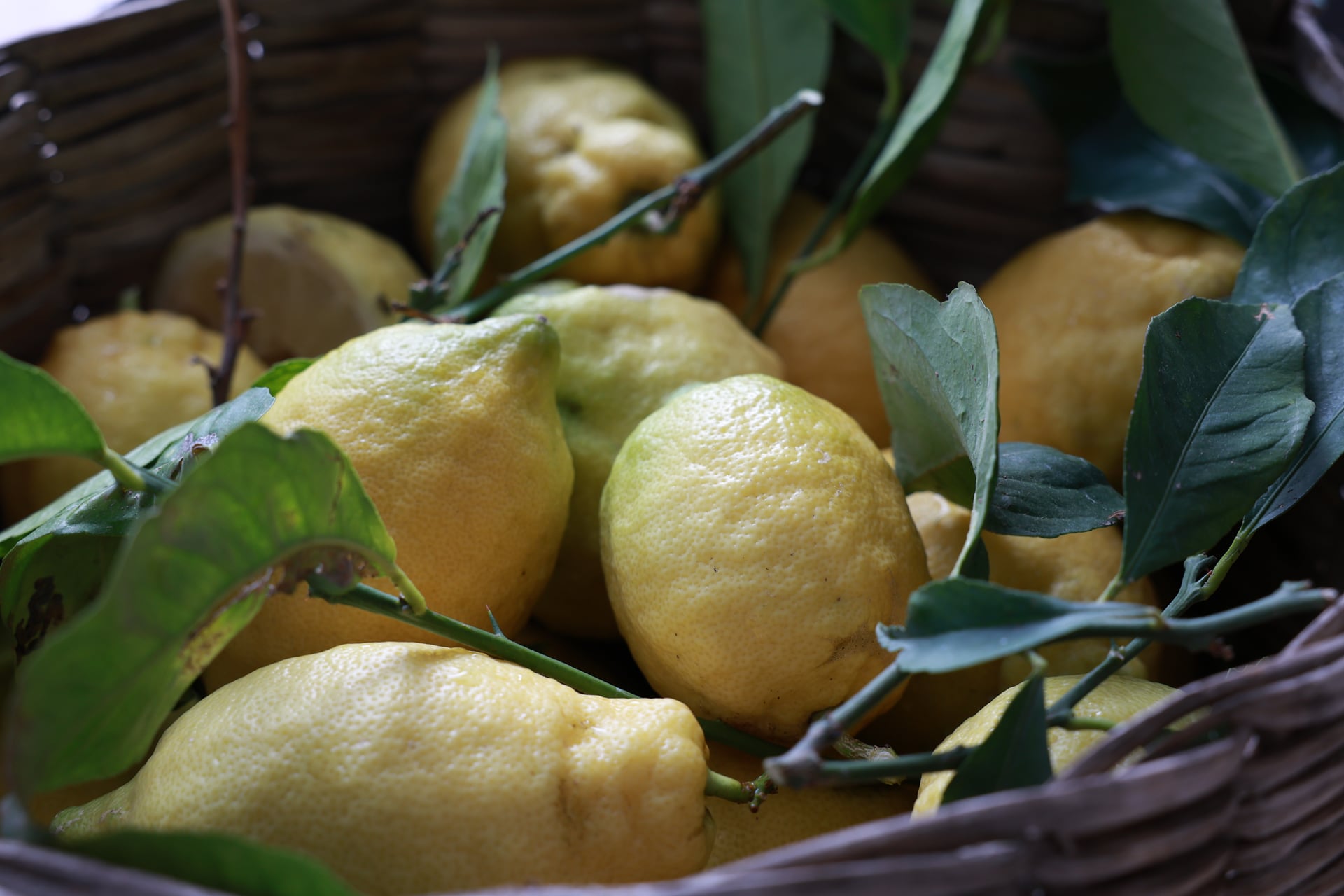
There’s a moment that happens to most people on the Amalfi Coast. You arrive, you look at the sea, you eat something extraordinary, you take a photograph of a lemon the size of your fist, and then you go back to the same three towns everyone else visits—Positano, Ravello and Amalfi. All beautiful, all real and yet, with a slight turn of the wheel, a road that climbs rather than clings to the shore, you can find yourself somewhere that feels entirely different. Quieter, wilder and less photographed, but somehow more essential—that place is Tramonti.
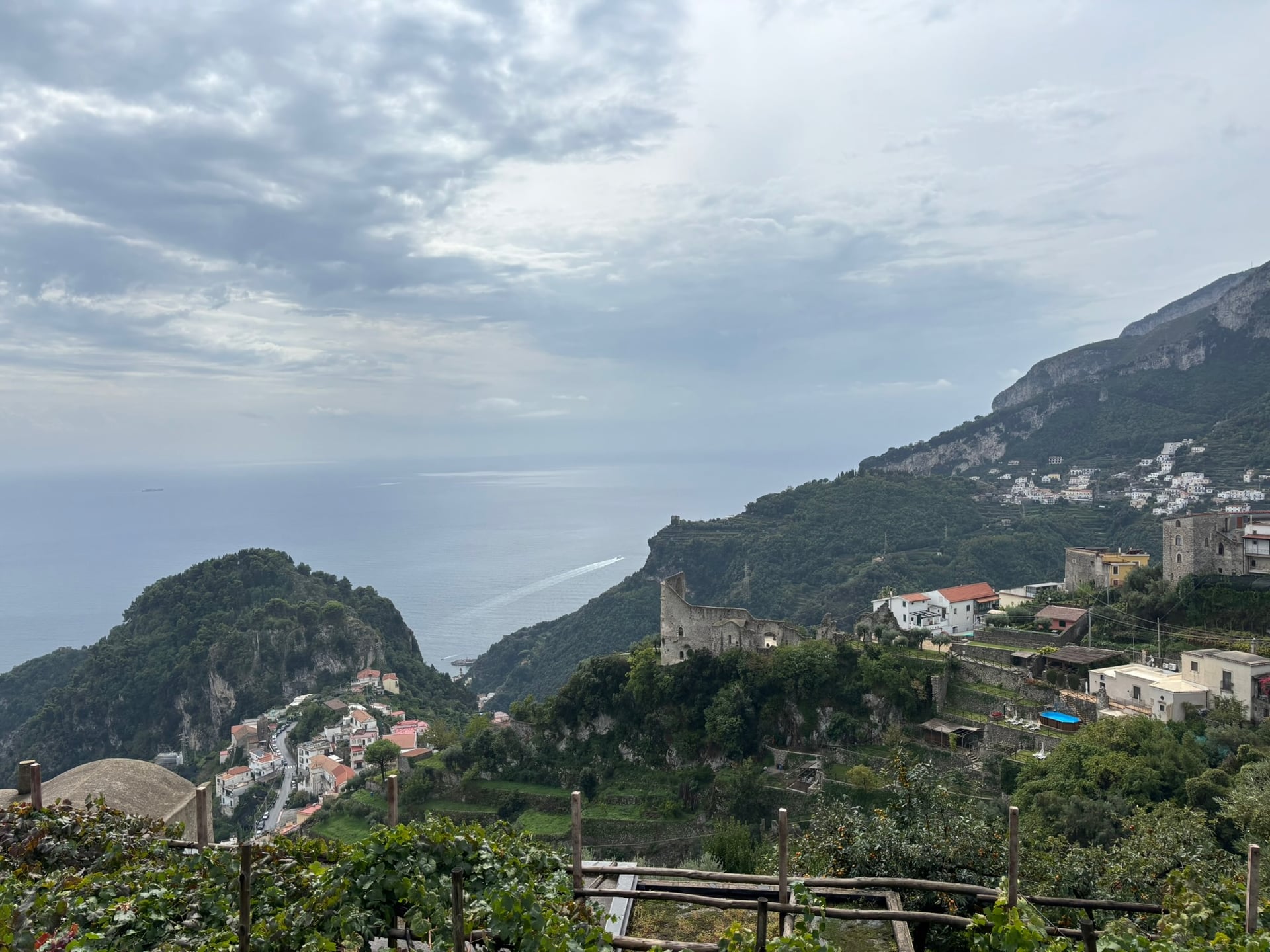
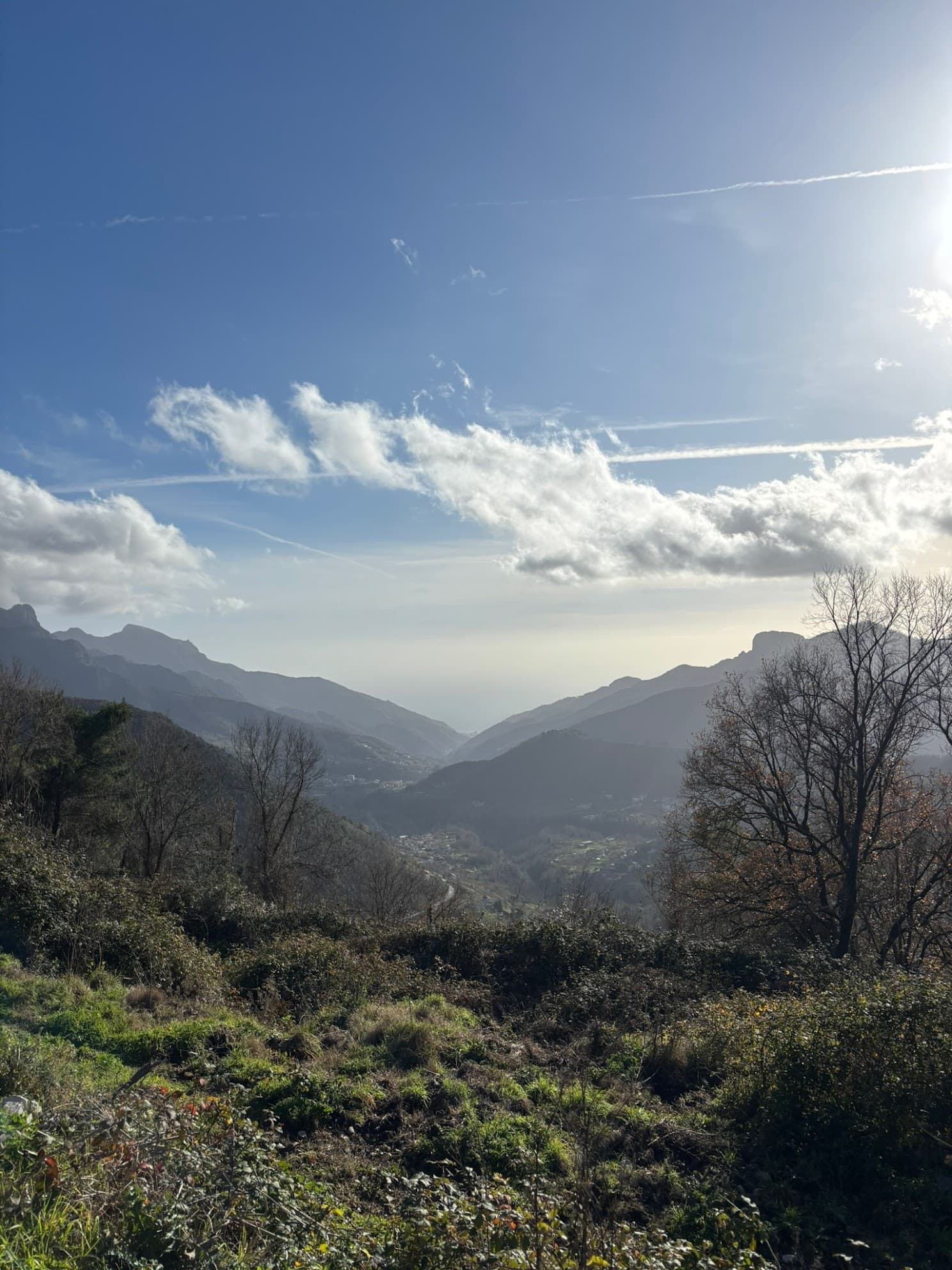
Tramonti is one of the Amalfi Coast’s hidden gems, not because it’s been forgotten, but because it was never really designed for spectacle. It sits inland, in a broad green valley at around 300 metres above sea level, surrounded by the Monti Lattari. It doesn’t have a famous cliff-road view or a beach. What it has, instead, is something harder to photograph but easier to feel—a living culture built slowly, over centuries, around food, wine, community, and an incredible relationship with the land.
To understand Tramonti, it helps to grasp its role in history. The name itself derives from the Latin “trans montes” (beyond the mountains) and that’s exactly what it was—the productive interior that made the Republic of Amalfi possible.
The Repubblica Marinara di Amalfi was, at the height of its power, one of the most powerful maritime states in the Mediterranean. Its ships traded across continents while its merchants wrote some of the earliest maritime law in history. Behind all of that nautical ambition was a valley quietly doing the harder work—supplying timber for the galleys, dairy products renowned across the region, and agricultural goods that sustained a community built on trade.
The Monti Lattari, whose name literally means “milk mountains”, were famous in Roman times for their dairy. Tramonti was part of that tradition—the valley provided and the coast exported. The partnership shaped both places, and traces of it are still visible if you know where to look.
Today, Tramonti is made up of thirteen small hamlets (frazioni) scattered across the valley. There is no single town centre; instead, each hamlet has its own church, its own piazza, its own micro culture. This dispersed organisation, a kind of slow-motion urban form, makes Tramonti best experienced by roaming rather than following a strict plan. The best discoveries here tend to happen when you take a wrong turn and find yourself at an unmarked table with the best wine you’ve had all year.
Wine is probably the most compelling reason to know about Tramonti, and the reason starts underground. In the late nineteenth and early twentieth centuries, phylloxera (the microscopic insect that devastated European viticulture) swept through countless vineyards across the continent. The solution, eventually, was to graft European vines onto American rootstocks, which are naturally resistant to the pest. Almost all of Europe’s wine today comes from vines that were replanted this way after the crisis.
Almost all. Not Tramonti.
The valley’s soils are volcanic and sandy, and those specific conditions (loose, mineral-rich, with poor water retention) are deeply inhospitable to phylloxera. The insect’s eggs cannot survive properly in them, so Tramonti’s ancient vines, rooted directly into their original volcanic earth, survived. Today, the valley contains some of the rare pre-phylloxera, ungrafted (“piede franco”) vines left in Europe. Some of these plants are over 500 years old, their trunks as wide as small trees, trained under the local “pergola tramontina”, a fan of chestnut poles that holds the canopy above your head as you walk underneath.
The key grape variety here is Tintore, a dark-skinned indigenous cultivar whose name comes from the coloured flesh inside—unusual for a red grape. It produces wines of striking depth—intensely coloured, with an aroma profile that tends towards blackberries, earth, graphite, ash, and something faintly herbal, like wild fennel caught on the breeze. They age beautifully, develop over the years, and are virtually impossible to find outside this valley. Producers like Tenuta San Francesco, Reale, and Monte di Grazia have been working with these ancient vines for decades, treating each harvest more like archaeology than agriculture.
The DOC designation Costa d’Amalfi DOC sottozona Tramonti, created in 1995, protects both the red and white expressions of this terroir. The white wines, often made from local varieties like Pepella and Ginestra, can be equally compelling—fresh, mineral, and carrying that distinctive quality that comes from volcanic soils and sea-influenced air.
Visiting a winery here is different from most wine tourism—you’re not walking into a polished tasting room. You’re likely to end up under one of those ancient pergolas, glass in hand, talking to someone whose family has been doing this for generations, who will tell you stories about the vines as if they were relatives.
Here’s something that tends to surprise people—Tramonti has a legitimate, well-documented claim to being a foundational centre of pizza culture. Not as a rival to Naples—that’s not quite the point—but as a lesser-known chapter of the pizza story that’s worth knowing.
The pizza of Tramonti began not in a restaurant or a pizzeria, but at home, as a by-product of bread-making. Scraps of whole grain dough made from rye, millet, barley, whatever was available in a mountain community, were flattened and topped with what the land provided—Spunzilli tomatoes, local olive oil, garlic, wild oregano. It was practical food and it developed its own distinct character, including the famous pizza nera (dark pizza), made with darker flours and historically associated with commemorative occasions, a food with a strong symbolic weight.
The connection between Tramonti and pizza then spread outward, literally carried by the people who left. It is estimated that more than 3,000 pizzerias worldwide are run by families originally from Tramonti. The people of the valley who moved away, especially to Northern Italy and beyond, took their recipes with them. When you eat a pizza in Milan, or in a little Italian-run place in London, there’s a reasonable chance it has roots in this valley.
In 2010, Tramonti became the first municipality in Italy to award its pizza a De.Co. (Denominazione Comunale) a local certification protecting the authenticity of the product. The Rulebook specifies whole-grain or dark flour, fior di latte made from local milk, heirloom tomatoes, and wild-foraged fennel as characteristic ingredients. It is not an attempt to compete with Neapolitan pizza—it is an attempt to preserve something older and deeply local.
Watching a master pizzaiolo from one of Tramonti’s historic families prepare a pizza here is a different experience from most—it’s slower, more deliberate. The dough is older in its DNA, the flour carries history. If you get the chance, don’t eat in a hurry.
Dairy has been a big part of Tramonti’s identity for as long as anyone has been writing about it. The Monti Lattari’s name is a reminder of how important milk production once was to this whole area, and that tradition has not disappeared.
Small artisan caseifici (cheese dairies) in the valley still produce fior di latte, smoked provola, and ricotta using short supply chains and manual techniques that refuse the logic of industrial production. The cheese known as “fior-di-latte” here, made from local bovine milk from the surrounding hills, has a delicacy that’s hard to describe if you’ve only eaten supermarket mozzarella—it’s the difference between a photograph of a place and standing in it.
The smoked provola of Tramonti is something else again—firm, golden-skinned, with a depth that comes from the smoking process and the milk’s quality. It’s a product that travels well and this is partly why it was so important to the Republic of Amalfi, which needed durable provisions for long sea journeys.
If you’re visiting, and you can arrange it, watching the filatura, which is the hand-stretching of fresh mozzarella curd in hot water, is one of those experiences that somehow communicates more about food culture than any amount of reading. The simplicity and the skill involved exist in a ratio that is simply astonishing.
One of Tramonti’s most remarkable features is a trail called Sentiero delle Formichelle (in English the Path of the Little Ants). It connects Tramonti to the coastal towns of Maiori and Minori, descending through terraced lemon groves, ancient hamlets, and chestnut forests before reaching the sea.
The name is not a metaphor about the trail’s difficulty, though it is demanding. It refers to the women, the formichelle, little ants, who made this journey daily, carrying heavy baskets of lemons on their heads from the valley’s groves down to the coastal markets. The path is, in a very literal sense, a monument to their labour and resilience, a kind of archive of the Coast's social history.
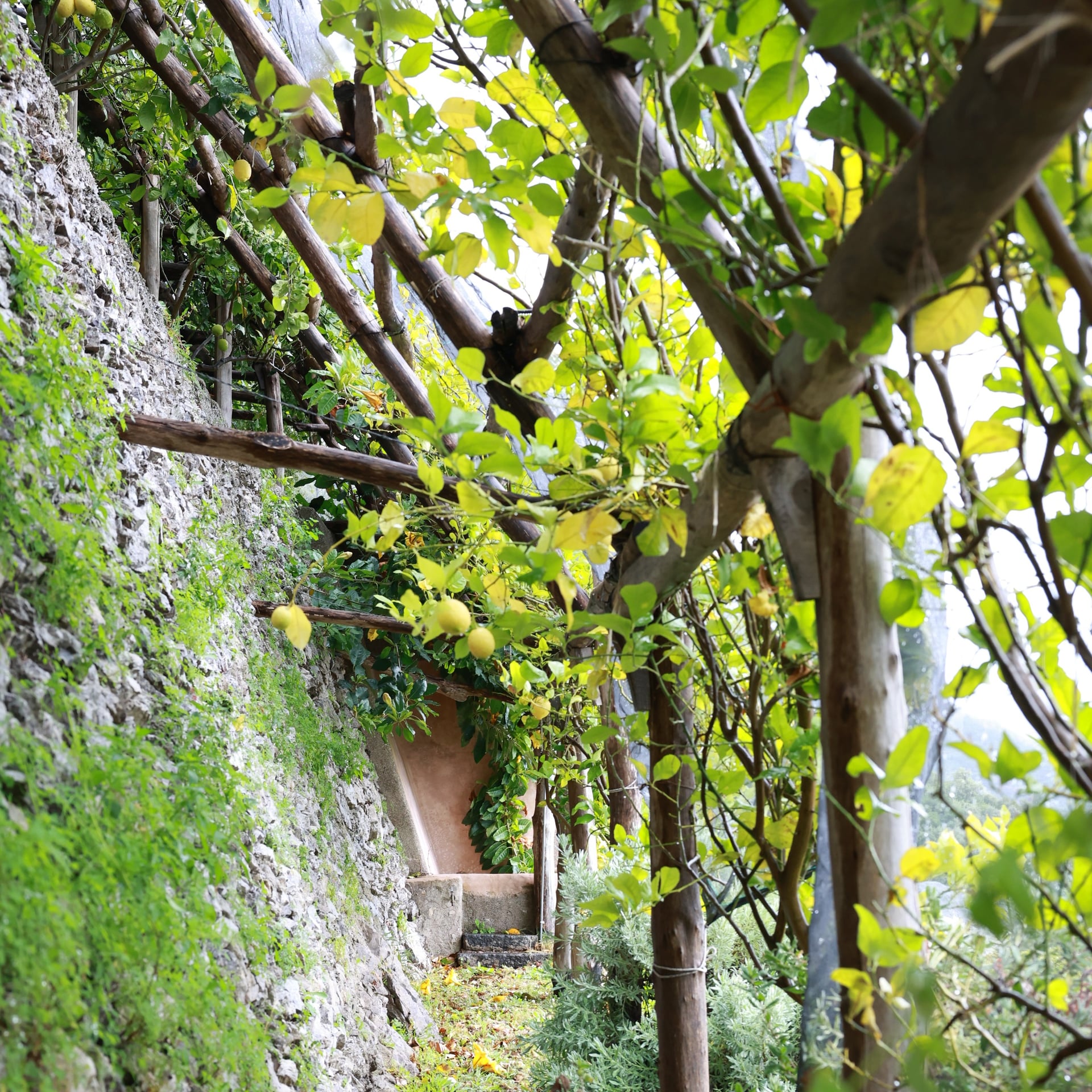
Walking it today, you pass through Sfusato lemon groves trained on wooden pergolati, their canopies filtering the light into something golden and restless. You emerge onto views of the sea that appear suddenly, like a reward for your climb and there you understand something about the relationship between the valley and the coast that no amount of driving along the main road will give you.
The trail also passes near the Giardino Segreto dell’Anima in Campinola, a private botanical garden with over 1,200 plant varieties and 350 rose varieties, maintained by the Telese and De Marco families. It opens for guided visits by appointment and occasionally hosts evening events like concerts or nocturnal walks by candlelight that feel, from all accounts, less like tourism and more like a private invitation into someone’s lifelong project.
One reason Tramonti produces such distinctive food and wine is a microclimate that rarely makes it into the glossy tourist guides. While the coastal strip of the Amalfi Coast receives intense sun and relatively uniform temperatures, the valley benefits from a more continental influence—greater temperature variation between day and night, reliable humidity from the surrounding mountains, and constant sea breezes coming up from the Gulf of Salerno.
For viticulture, this means slower, more complete phenolic ripening—the kind of extended growing season that produces complexity in wines. For the chestnut forests, it creates ideal conditions for growth; those same trees provided the poles for the pergola tramontina, closing a loop between landscape and agriculture that is characteristic of the valley. For the dairy, the pastures on the surrounding hills stay greener longer into the year, and the milk carries it.
The volcanic soils complete the picture—they are not only free-draining, but rich in minerals, carrying millennia of geological history. This gives everything grown here a specificity that no amount of technique can fully replicate elsewhere. This is terroir in the strictest sense—not as a marketing word, but as a simple observation that this place makes things that can only come from here.
At Lemon Appeal, we’ve spent a lot of time on this coast, looking for the things that are real. Not the postcard, not the tourist version, not the thing that exists because it has learned to be photographed—the actual thing. The one that would be there whether anyone was watching or not.
Tramonti is that. It’s a valley that has been producing, fermenting, stretching curd, flattening dough, and walking paths for centuries. Not to be seen, but because that’s what the place does. The food and wine that come out of it carry that weight in the best possible sense—there’s no performance in it.
It also connects, for us, to a broader conversation about what the Amalfi Coast actually is beneath its famous surface. The coast and its interior have always been in dialogue. The fishing families on the waterfront, the farming families in the hills, the timber from Tramonti’s mountains, the lemons carried down the Sentiero delle Formichelle—these aren’t separate stories. They are one story, told from different angles.
If you’ve already seen the coast and you’re wondering what’s still left to discover or if you’re planning a first trip and want more than the obvious—Tramonti is the answer we’d give you. Take the road that climbs, spend time in a vineyard, eat pizza made with dark flour and locally foraged fennel. Let someone pour you a glass of Tintore and try to explain, without quite being able to, how a wine can taste this much like a specific place.
Then stay a little longer than you planned. The valley tends to have that effect.